
Meet the Luwak and Owl During Your Bali Coffee Stop

A Bali coffee stop can offer more than local flavors.
At Jambe Asri Agrotourism, visitors can learn about luwak coffee Bali, explore the coffee process, meet the luwak connected to the story, spend time with an owl, join a guided tasting, enjoy the plantation atmosphere, and continue toward supporting experiences such as the Bali swing and local shop.
For travelers who enjoy animals, photography, nature, and local experiences, the luwak and owl encounters can become two of the most memorable moments during the visit.
But each animal has a different role.
The luwak is directly connected to the coffee journey.
The owl adds a fun supporting animal encounter.
Together, they bring more variety to one complete Bali coffee experience.
Meet the Luwak Behind the Coffee Story

The luwak is one of the most important parts of the Jambe Asri experience.
Many travelers already recognize the name luwak coffee before arriving in Bali, but they may not understand why the animal is connected to the process.
The journey begins with ripe coffee cherries.
The luwak selects and eats the fruit, while the coffee beans later continue through several preparation stages.
Those stages include careful cleaning, drying, sorting, roasting, and final preparation before the guided tasting.
This means the luwak is not included only as an animal attraction.
It has a clear connection to the coffee story.
Visitors can learn how the process works first and then meet the luwak with more context.
That makes the encounter easier to understand and remember.
Why Meeting the Luwak Adds Value

Learning something through explanation is useful.
Connecting that explanation with a real visitor moment makes it more memorable.
At Jambe Asri, meeting the luwak helps visitors connect the coffee process with the animal involved in its distinctive early stage.
For first-time travelers, this can make the story feel much clearer.
Instead of only hearing that luwak coffee follows a different process, visitors can understand how the animal fits into the wider journey.
The encounter should be approached with curiosity and respect while visitors follow the guidance available at the destination.
The strongest value of the moment comes from understanding its connection to coffee.
The luwak gives the story context.
The process gives the encounter meaning.
The Owl Adds a Different Type of Experience

Jambe Asri also includes an owl encounter.
Unlike the luwak, the owl is not part of the coffee process.
It works as an additional visitor attraction that adds variety to the experience.
This distinction is important because Jambe Asri remains focused on luwak coffee.
The luwak belongs directly to the central coffee story.
The owl creates another interesting moment during the visit.
For families, couples, small groups, and travelers creating Bali content, the owl encounter Bali experience can add something unexpected to the day.
It gives guests another opportunity to enjoy an animal moment without needing to arrange a separate destination.
Two Animal Moments, Two Different Roles

The luwak and owl may both attract visitor attention, but they should not be communicated in the same way.
The luwak is educationally connected to coffee.
The owl is a supporting attraction.
This creates a more balanced visitor journey.
Travelers can learn why the luwak matters, meet the animal, and later enjoy the owl as another part of their time at Jambe Asri.
For content creators, the contrast also gives the visit more visual variety.
A travel reel can move from plantation greenery to coffee preparation, then to the luwak encounter, owl moment, guided tasting, swing, and local shop.
The result feels like a complete visit rather than one isolated activity.
Learn the Coffee Process Before the Animal Encounter

One of the best ways to experience the luwak encounter is to understand the coffee story first.
At Jambe Asri, visitors can learn the process in a simple sequence.
It begins with the coffee cherries.
The luwak becomes part of the early journey.
The beans later move through careful preparation, including cleaning, drying, sorting, and roasting.
Final preparation then leads toward the guided tasting session.
Travelers do not need technical knowledge.
The explanation is designed to remain clear and tourism-friendly.
This gives the luwak encounter a purpose.
You are not meeting an animal without context.
You understand why the luwak is closely connected to one of Bali’s most recognized coffee experiences.
Continue Into the Guided Tasting
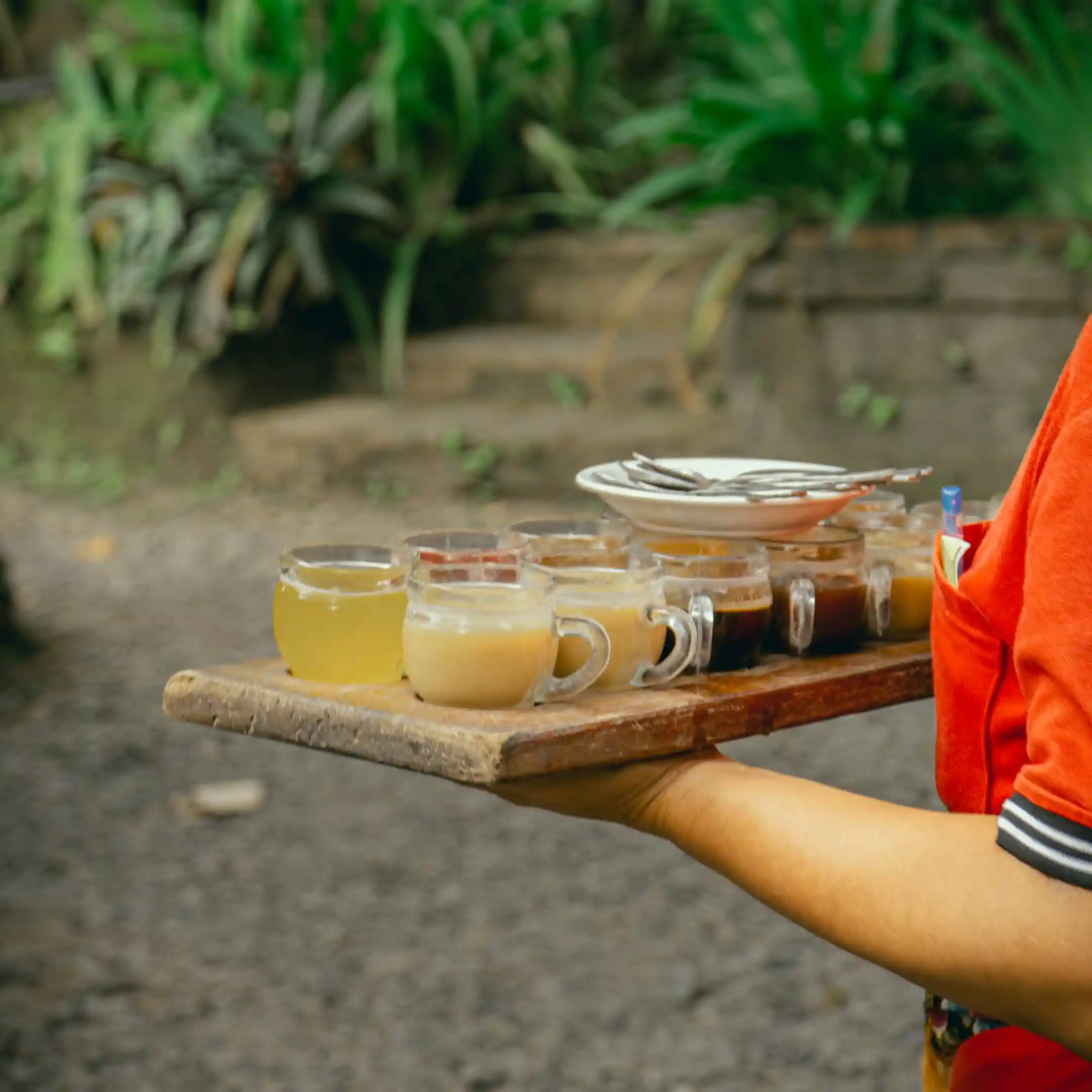
After learning the process and meeting the luwak, the guided tasting becomes the natural next part of the journey.
Visitors can explore local flavors while focusing on aroma, strength, body, and personal preference.
Some selections may feel stronger.
Others may feel smoother, lighter, sweeter, earthier, or more aromatic.
There is no need for professional tasting vocabulary.
The guided format helps visitors understand the available selections in a relaxed way.
The earlier luwak encounter also gives the tasting more context.
Visitors already understand why the animal is part of the coffee story and what happens before the final preparation.
That makes the guided session feel connected to the experience rather than separate from it.
Enjoy the Plantation Atmosphere

The coffee plantation setting also plays an important role.
Tropical greenery and natural surroundings create the environment where the coffee story, animal encounters, and tasting come together.
For travelers looking for a lighter Bali activity, the plantation can provide a calmer stop between larger destinations.
You can learn, explore, interact with the experience, and move through the location at a comfortable pace.
The natural atmosphere also works well visually.
Plantation details, the luwak, owl, tasting moments, and local products can all become part of the same travel story.
This gives Jambe Asri a different feel from a regular coffee location.
Add the Bali Swing for Another Fun Moment

After the coffee-focused stages, Jambe Asri also offers a Bali swing as a supporting experience.
This gives visitors another fun activity within the plantation environment.
Couples can capture a holiday moment.
Families and groups can enjoy a lighter activity.
Content creators can add more movement to their travel footage.
The swing remains secondary to the luwak coffee journey.
It adds another layer without taking attention away from the main story.
For travelers who enjoy variety, this means one location can include learning, animals, tasting, nature, photography, and local shopping.
Finish at the Local Shop

The local shop creates a natural final stage to the visit.
After learning about coffee, meeting the animals, and joining the guided tasting, visitors can explore products such as local coffee, herbal tea, spices, aromatherapy, Bali souvenirs, and other local selections.
This gives the journey a clear ending.
You already have context about the coffee.
You may have discovered flavors that interest you.
Now you can explore products connected to the destination before continuing your Bali travel plans.
For visitors looking for gifts or local products, this makes the stop even more practical.
Why the Animal Encounters Make the Visit More Memorable
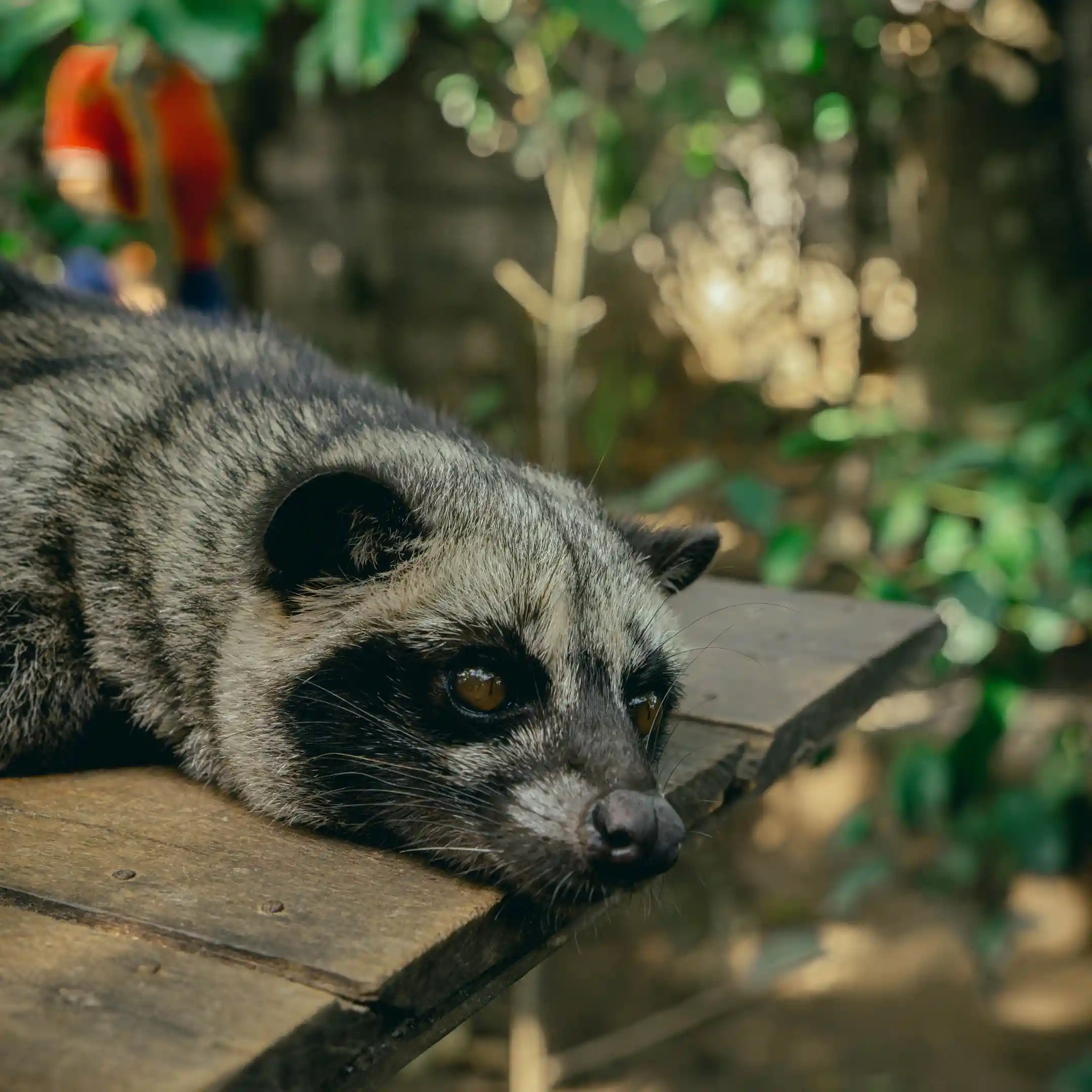
The strongest part of the animal experience at Jambe Asri is the contrast between the two encounters.
The luwak teaches visitors something about coffee.
The owl adds a fun supporting moment.
Together, they make the visit more varied without changing the destination’s main identity.
This can work well for:
- Coffee lovers
- Couples
- Families
- Small groups
- Solo travelers
- Content creators
- Visitors looking for different Bali activities
- Travelers interested in nature and local experiences
The result is a Bali coffee stop that offers more than one type of memory.
About Jambe Asri Agrotourism
Jambe Asri Agrotourism is a Bali agrotourism destination focused on creating a complete luwak coffee experience within a natural plantation environment.
The destination is built around one central story: helping visitors understand and experience luwak coffee through the process, the luwak encounter, guided tasting, plantation atmosphere, and local products.
A visit can begin inside the tropical plantation setting.
This introduces guests to the natural environment behind the experience and creates a relaxed atmosphere before the educational part begins.
Visitors can then learn about the coffee process.
The journey introduces ripe coffee cherries, explains the role of the luwak, and continues through the main preparation stages that happen before tasting.
The educational approach is designed to remain simple and tourism-friendly.
First-time travelers do not need previous coffee knowledge.
Coffee enthusiasts can focus more closely on the process, while casual visitors can still follow the central story without feeling overwhelmed.
The luwak encounter forms one of the most important parts of the Jambe Asri journey because the animal is directly connected to the coffee process.
After learning about its role, visitors can meet the luwak with more context and understand why it is central to the destination’s coffee story.
The owl encounter adds another type of visitor experience.
The owl is not part of the coffee preparation process, so it is positioned as a supporting attraction rather than a core element.
This gives Jambe Asri an additional animal moment while keeping the main luwak coffee positioning clear.
The guided tasting then connects learning with personal preference.
Visitors can explore local flavors after understanding more about what happens beforehand.
This helps the tasting feel like part of a complete journey rather than an isolated activity.
The plantation atmosphere continues to support every stage.
Tropical greenery and natural surroundings give Jambe Asri a strong agrotourism character and create a calmer setting for visitors.
A Bali swing is also available as a supporting photo experience within the plantation.
It adds another playful moment for couples, families, groups, and content creators without replacing the coffee journey as the main reason to visit.
The local shop completes the visitor experience.
Guests can explore local coffee, herbal tea, spices, aromatherapy, Bali souvenirs, and other local products before leaving.
Because the shop follows the learning and tasting stages, visitors already have more context when browsing the selections.
The complete Jambe Asri experience can therefore be understood as:
Plantation Atmosphere → Coffee Process → Meet the Luwak → Guided Tasting → Owl and Swing Moments → Local Shop
This structure makes Jambe Asri suitable for international and domestic travelers, couples, families, solo visitors, small groups, coffee lovers, and travelers searching for a Bali coffee experience with several connected moments in one destination.
Its strongest value comes from the way every part has a clear purpose.
The plantation creates the environment.
The coffee process creates understanding.
The luwak connects directly to the central story.
The guided tasting turns learning into personal experience.
The owl adds another animal encounter.
The swing adds a photo-friendly activity.
The local shop completes the journey with products connected to the destination.
Together, these elements create a complete visitor experience while keeping luwak coffee at the center.
Add the Luwak and Owl to Your Bali Coffee Journey
A Bali coffee stop can include more than tasting.
At Jambe Asri Agrotourism, visitors can learn the luwak coffee process, meet the luwak connected to the story, enjoy an owl encounter, explore local flavors, spend time in the plantation atmosphere, and continue through several supporting experiences.
Two animal moments.
One clear coffee journey.
Discover the complete Jambe Asri experience at www.jambeasriagrotourism.com

