
A Simple Guide to Luwak Coffee for First-Time Bali Travelers
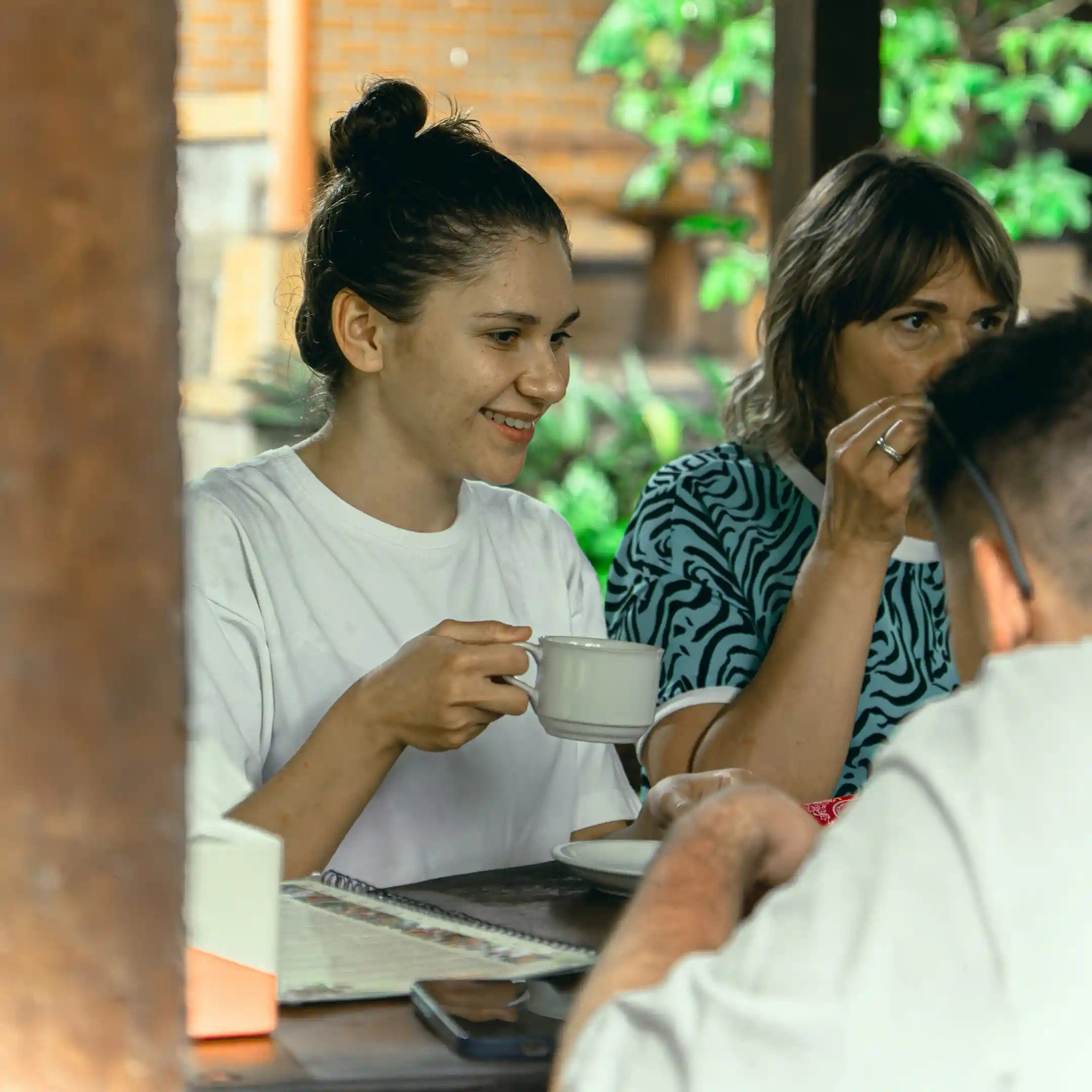
If this is your first trip to Bali, there is a good chance you will hear about luwak coffee somewhere along the way.
It may appear on a travel itinerary, inside a coffee plantation, through recommendations from a driver, or while searching for a local experience beyond beaches and temples.
But what exactly is luwak coffee? Why has it become so well known in Bali? And what should a first-time visitor expect from the experience?
This simple Bali coffee guide is designed for travelers who are curious but do not want an overly technical explanation.
At Jambe Asri Agrotourism, visitors can learn about the process behind luwak coffee Bali, meet the luwak, join a guided tasting session, enjoy a tropical plantation atmosphere, try a swing, meet an owl, and explore local products before continuing their trip.
Here is what you should know before adding luwak coffee to your Bali itinerary.
What Is Luwak Coffee?

Luwak coffee is known for a distinctive preparation process involving the luwak.
The journey begins with ripe coffee cherries. The luwak selects and eats the fruit, while the coffee beans later pass through the animal.
After collection, the beans continue through important preparation stages such as careful cleaning, drying, sorting, roasting, and final preparation before they are ready for tasting.
That connection with the luwak is what makes the process different from regular coffee preparation.
For a first time Bali traveler, this is usually the easiest way to understand it:
Luwak coffee is not simply a different coffee variety. Its identity comes largely from the unusual journey the beans go through before the later preparation stages begin.
This is also why learning about the process before tasting can make the experience much more interesting.
Instead of trying something famous without context, you understand how the journey works and why the luwak is connected to the story.
Why Is Luwak Coffee Famous in Bali?

One reason luwak coffee attracts so much attention is that its process is unusual.
Travelers are naturally curious about experiences they cannot easily find in their everyday routine, and the connection between coffee cherries, the luwak, plantation preparation, and tasting creates a story that is easy to remember.
Bali’s strong tourism industry has also made coffee plantation visits accessible to international travelers.
Visitors can include a coffee plantation Bali stop between other destinations and experience the story directly rather than only reading about it.
The combination of education, local flavors, tropical nature, and visitor interaction makes luwak coffee suitable for many different travel styles.
Coffee enthusiasts may focus on preparation and roasting.
Couples can enjoy the experience together.
Families may appreciate the educational side.
Solo travelers can ask questions and explore at their own pace.
For many visitors, the attraction is not only the final flavor. It is the chance to understand a distinctive process while exploring a local side of Bali.
Is Luwak Coffee Supposed to Taste Completely Different?
This is one of the most common expectations first-time visitors have.
The answer is not always simple.
The final character of coffee can depend on several factors, including the coffee itself, preparation, drying, roasting, freshness, and how it is prepared for tasting.
Personal preference also matters.
Some travelers may notice a clear difference. Others may focus more on the overall process and plantation experience.
That is completely normal.
Luwak coffee should not be approached with the expectation that everyone must prefer it over regular coffee.
A better approach is to arrive curious.
During a coffee tasting Bali experience, pay attention to aroma, strength, body, and overall character. Compare the available selections and decide what you personally enjoy.
That makes the tasting more relaxed and realistic.
Learn the Process Before the Tasting

One of the best ways to experience luwak coffee for the first time is to learn what happens before tasting.
At Jambe Asri, visitors can explore the main coffee process in an easy-to-follow sequence.
It begins with coffee cherries and the role of the luwak.
The beans later continue through cleaning and drying before being sorted and roasted. Final preparation then brings the journey toward the guided tasting session.
You do not need to memorize every stage.
The purpose is to understand that luwak coffee involves more than one unusual step.
Cleaning matters.
Drying matters.
Sorting and roasting also matter.
By the time you reach the tasting session, you already know that the final experience is connected to a longer preparation journey.
This educational element makes Jambe Asri useful for first-time visitors who want more than a quick coffee stop.
Meet the Luwak

Meeting the luwak can help make the earlier explanation easier to understand.
Instead of thinking of the animal as an abstract part of the coffee story, visitors can connect the encounter with what they have just learned.
The luwak is one of the central elements of the Jambe Asri experience because it is directly connected to the core coffee process.
Visitors should approach the encounter respectfully and follow the guidance provided at the location.
The purpose is to understand the luwak’s role rather than treating the animal only as a photo opportunity.
Jambe Asri also has an owl encounter as an additional visitor experience.
The owl adds another memorable moment, particularly for families, couples, and travelers creating holiday content, while the main focus remains the luwak coffee journey.
Join a Guided Coffee Tasting

After learning about the process, the guided tasting becomes much easier to appreciate.
Visitors can explore local flavors while focusing on simple characteristics such as aroma, strength, body, and personal preference.
There is no need to know professional coffee terminology.
You may prefer a stronger selection while your travel partner enjoys something smoother or lighter. Different preferences are part of the experience.
A guided tasting also gives visitors an opportunity to ask questions.
You can learn more about the available selections and understand how the coffee process connects with what you are exploring during the session.
For first-time travelers, the guided format is especially useful because it adds direction without making the experience feel formal or complicated.
The tasting can also help when you reach the local shop later in the visit.
You may already have an idea of which coffee or other local products interest you.
Enjoy the Plantation Atmosphere
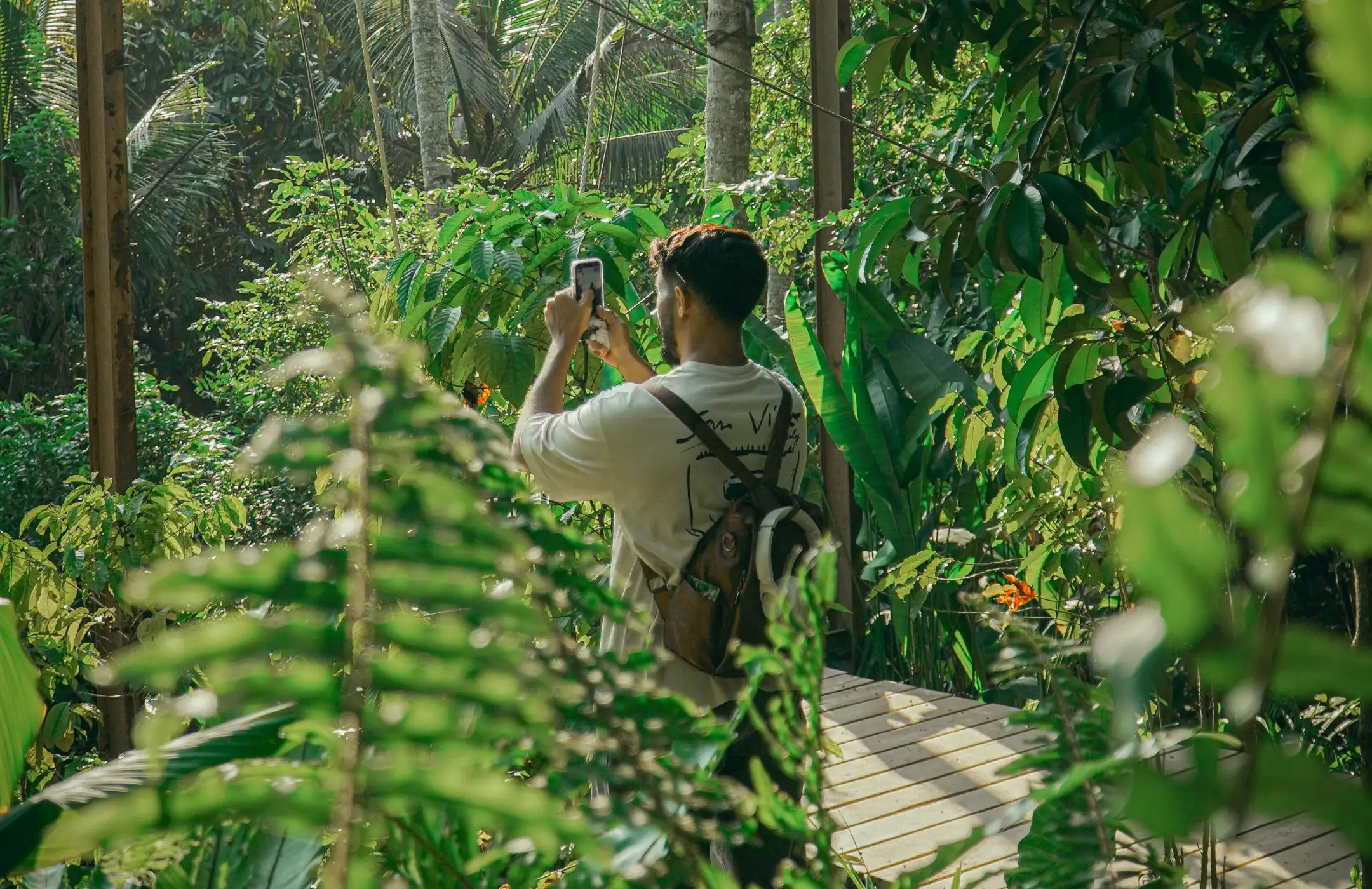
A coffee plantation visit is not only about coffee.
The setting also plays an important role.
At Jambe Asri, tropical greenery and natural surroundings create a calm environment for the visitor journey.
This can be a welcome change during a busy Bali holiday.
Many travelers fill their days with temples, waterfalls, markets, beaches, and long drives. A plantation stop offers a slower type of activity that can still add something meaningful to the itinerary.
Visitors can learn, explore the surroundings, take photos, and move through the experience at a comfortable pace.
For travelers looking for a Bali local experience, this connection between nature and coffee is one of the strongest reasons to consider an agrotourism stop.
Add a Bali Swing Moment

After the coffee process and tasting, the Bali swing adds a more playful part to the visit.
Visitors can capture a holiday photo or short video surrounded by plantation scenery.
The important point is that the swing remains an additional attraction.
Jambe Asri is not primarily a swing destination.
The luwak coffee experience comes first, while the swing adds another enjoyable moment for couples, families, groups, solo travelers, and content creators.
This makes the overall visit more varied without changing its core identity.
Explore Local Products Before Leaving
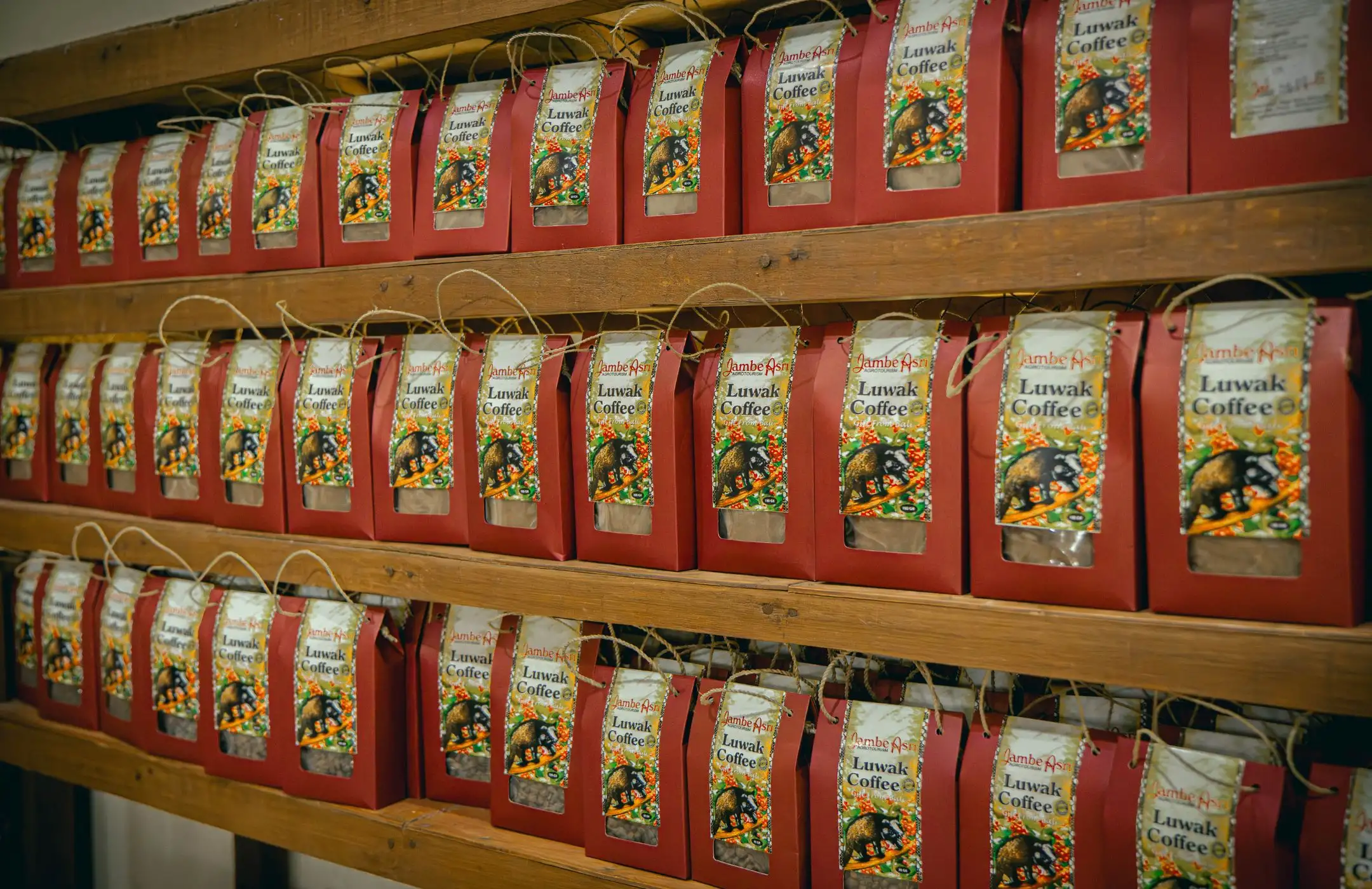
The local shop provides a natural final stage.
Visitors can explore items such as local coffee, herbal tea, spices, aromatherapy, Bali souvenirs, and other local selections.
Shopping after the guided tasting can feel more relevant because you already have more context about the products.
You may choose coffee connected to a flavor you explored earlier or find a different local item to bring home as a reminder of your Bali trip.
This creates a simple customer journey from learning to tasting and finally to local shopping.
Should First-Time Bali Travelers Add Luwak Coffee to Their Itinerary?
If you are looking for variety, it can be a useful addition.
A first Bali trip often focuses heavily on major landmarks. Adding a plantation experience introduces a different part of the island.
Instead of another scenic stop, you can learn about a local process, explore coffee flavors, spend time in a tropical environment, and enjoy several light activities in one destination.
This can work particularly well for travelers who want:
- A relaxed activity
- A local coffee experience
- Something educational without being too formal
- A stop that works for couples or families
- Several connected experiences in one location
- Local products to explore before continuing the trip
The strongest approach is to include luwak coffee as part of a balanced Bali itinerary, rather than treating it as something that must replace other major attractions.
About Jambe Asri Agrotourism
Jambe Asri Agrotourism is a Bali agrotourism destination focused on introducing visitors to a complete luwak coffee experience.
The destination is designed around a clear journey rather than presenting coffee only as a finished product.
Visitors can begin by spending time in the tropical plantation environment and learning about the story behind luwak coffee. The experience explains the main preparation stages in a simple and accessible way, making it suitable for travelers who may be discovering luwak coffee for the first time.
Guests can learn about coffee cherries, understand the connection with the luwak, and explore how the beans continue through preparation before reaching the guided tasting session.
The luwak encounter provides another important part of the experience because it connects directly with the coffee story visitors have learned.
An owl encounter is also available as a supporting activity, giving families, couples, small groups, and content creators another memorable moment during the visit.
The guided coffee tasting then allows visitors to explore local flavors with more context.
Rather than arriving only to taste coffee, guests already understand more about the process behind it. This helps connect education and flavor within one experience.
Jambe Asri also offers a Bali swing surrounded by the plantation atmosphere. The swing is positioned as an additional photo moment, not the main attraction, helping the destination offer more variety while keeping luwak coffee at its center.
The final stage of the visitor journey can continue at the local shop.
Here, travelers can explore local coffee, herbal tea, spices, aromatherapy, Bali souvenirs, and other local products. The shop allows visitors to continue the experience beyond the tasting and potentially bring home something connected to their visit.
The overall journey can be understood simply as:
Plantation atmosphere → Coffee process → Meet the luwak → Guided tasting → Owl and swing moments → Local shop
This makes Jambe Asri suitable for international and domestic travelers, first-time Bali visitors, couples, families, solo travelers, coffee lovers, small groups, and people searching for a local activity that is easy to combine with a wider Bali itinerary.
Its strongest value is the combination of several connected experiences in one place while maintaining one clear identity: the complete luwak coffee journey.
Start Your First Luwak Coffee Experience in Bali
You do not need to be a coffee expert to enjoy luwak coffee.
For a first-time traveler, the best approach is simple: learn the story, understand the process, explore the guided tasting, and enjoy the plantation experience with an open mind.
At Jambe Asri Agrotourism, you can experience that journey while also meeting the luwak, enjoying the natural setting, adding a swing moment, and exploring local products.
Plan your first luwak coffee experience at www.jambeasriagrotourism.com.


