
A Quick Tour of Jambe Asri Agrotourism in One Visit

Not every Bali experience needs a full day.
Sometimes, one well-planned stop can give you several different moments without making your itinerary feel crowded.
At Jambe Asri Agrotourism, visitors can experience a complete luwak coffee journey in one location. The visit can include a tropical plantation atmosphere, an introduction to the coffee process, a luwak encounter, guided tasting, an owl encounter, a swing moment, and time to explore the local shop.
The experience is easy to follow because every stage connects back to one clear core: luwak coffee Bali.
If you are curious about what a Bali coffee tour at Jambe Asri could look like, here is a simple mini itinerary you can follow from arrival to the final stop.
First Stop Explore the Plantation Atmosphere

Your visit begins inside the natural plantation environment.
This first stage gives you time to settle into the experience before learning about coffee.
Tropical greenery, natural textures, and coffee-related details create a setting that feels different from Bali’s busy roads and crowded attractions.
For travelers looking for a coffee plantation Bali experience, the environment is an important part of the visit.
It helps connect the coffee story with nature rather than presenting coffee only as a finished product.
You can take time to explore the surroundings, capture plantation photos, and become familiar with the setting before continuing to the educational part.
For couples, families, solo travelers, and small groups, this creates a relaxed start.
There is no need to rush immediately into the next activity.
The plantation introduces the mood and gives the whole visit a clear sense of place.
Second Stop Learn the Luwak Coffee Process
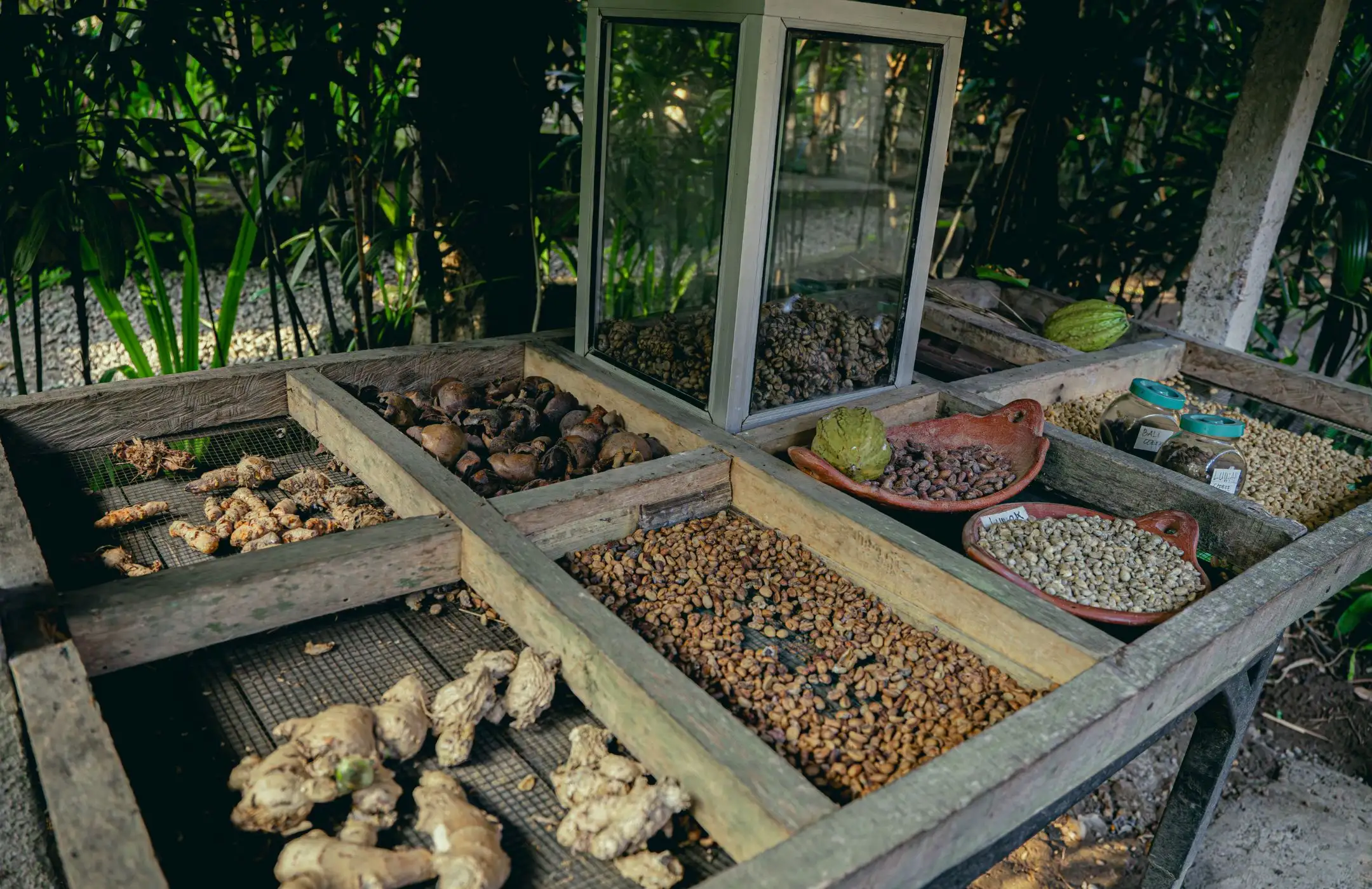
After exploring the plantation, the next stage is learning how luwak coffee is prepared.
This is one of the most important parts of the Jambe Asri experience.
Many travelers have heard about luwak coffee before arriving in Bali, but not everyone understands what happens before tasting.
The process begins with ripe coffee cherries and the role of the luwak.
The beans later continue through preparation stages including collection, careful cleaning, drying, sorting, roasting, and final preparation.
The explanation is designed to remain simple and approachable.
You do not need professional coffee knowledge.
The goal is to understand the journey clearly enough to appreciate the guided tasting later.
This gives the visit more value.
Instead of simply trying a famous local product, you begin to understand why the preparation is distinctive and how several stages contribute to the final experience.
For curious travelers, this can become one of the strongest parts of the visit.
Third Stop Meet the Luwak

After learning the process, it is time to meet the luwak.
This animal encounter directly connects with the coffee story visitors have just learned.
The luwak is involved in the distinctive early stage of luwak coffee preparation, making this encounter different from an unrelated animal attraction.
Meeting the luwak helps visitors connect the explanation with the animal itself.
The experience should be approached with curiosity and respect while guests follow the guidance provided at the destination.
For first-time visitors, this moment can make the overall process easier to remember.
You understand the coffee story first.
Then you meet the animal connected to it.
That sequence keeps the experience focused and educational.
Jambe Asri also includes an owl encounter as an additional visitor moment.
The owl is not part of the coffee process, but it adds another memorable stop to the mini itinerary, especially for families and travelers creating holiday content.
Fourth Stop Join the Guided Tasting

After understanding the process and meeting the luwak, the guided tasting becomes the natural next step.
This is where learning turns into a personal experience.
Visitors can explore different local flavors while paying attention to aroma, strength, body, and overall character.
No professional tasting vocabulary is required.
You can simply focus on what you personally enjoy.
Some selections may feel bold or earthy.
Others may feel smoother, lighter, sweeter, or more aromatic.
Your travel partner may prefer something completely different, and that is part of what makes the session enjoyable.
For couples, the tasting can become a shared experience.
Families and small groups can compare favorites.
Solo travelers can take time to ask questions and understand the available selections.
The guided format makes the experience informative without becoming formal.
Most importantly, the tasting makes more sense because you have already followed the stages that came before it.
You understand the process.
You have met the luwak.
Now you can connect that knowledge with flavor.
Fifth Stop Add a Swing Moment

After the coffee-focused part of the journey, the visit can become more playful.
The swing Bali experience at Jambe Asri gives visitors a chance to capture a photo or short travel video within the plantation setting.
The swing is a supporting attraction rather than the main reason to visit.
This is important to the Jambe Asri experience.
Coffee remains the core.
The swing simply adds another holiday moment after the educational and tasting stages.
For couples, it can become a fun photo together.
Families and groups can take turns.
Solo travelers and content creators can add movement to their Bali travel footage.
Because the swing is part of the plantation environment, it also feels visually connected to the rest of the visit.
You do not need to arrange another separate destination only for a photo moment.
It becomes one part of the wider coffee journey.
Sixth Stop Explore the Local Shop

The final stop is the local shop.
After learning, tasting, and exploring the plantation, visitors can browse local products connected to the experience.
The selection may include local coffee, herbal tea, spices, aromatherapy, Bali souvenirs, and other local items.
The timing makes this part feel natural.
You already understand more about the coffee process and may have discovered flavors you enjoyed during the tasting.
This gives you more context when exploring the shop.
You may choose a coffee selection connected to the tasting, find herbal tea or spices as gifts, or bring home aromatherapy or a souvenir as a reminder of the visit.
The local shop gives the visitor journey a clear ending.
You arrive curious about luwak coffee and leave with new knowledge, travel memories, photos, or local products connected to the destination.
Your Jambe Asri Mini Itinerary at a Glance
A visit can follow a simple sequence:
1. Plantation atmosphere
Begin in the natural tropical setting.
2. Coffee process
Learn how luwak coffee moves from coffee cherries through preparation.
3. Meet the luwak
Connect the coffee story with the animal involved.
4. Guided tasting
Explore local flavors with more context.
5. Swing and supporting moments
Add a playful plantation photo and explore the owl encounter.
6. Local shop
Complete the visit by browsing coffee, herbal tea, spices, aromatherapy, and Bali souvenirs.
This structure makes the experience easy to follow without feeling repetitive.
Each stage introduces something different while remaining connected to the main luwak coffee journey.
Why This Quick Tour Works for a Bali Itinerary
One practical advantage of Jambe Asri Agrotourism is that several experiences are available within one destination.
Travelers do not need to arrange separate stops for coffee education, tasting, an animal encounter, a plantation setting, a swing moment, and local shopping.
This makes Jambe Asri useful for different travel styles.
Couples can combine learning with a relaxed photo moment.
Families can enjoy a light educational experience alongside the animals.
Coffee lovers can focus more closely on the process and tasting.
Solo travelers can move through the experience at their own pace.
Small groups can enjoy several activities that appeal to different interests.
The destination can also add variety to a wider Bali itinerary.
Instead of another beach or temple stop, visitors can include a local coffee experience without turning the entire day into a complicated schedule.
About Jambe Asri Agrotourism
Jambe Asri Agrotourism is a Bali agrotourism destination focused on delivering a complete luwak coffee experience within one location.
The brand is built around a clear core: helping visitors understand and experience luwak coffee through the process, guided tasting, luwak encounter, plantation atmosphere, and local products.
Rather than presenting coffee only as something ready for tasting, Jambe Asri introduces the visitor to the journey behind it.
The experience can begin inside the tropical plantation setting, where guests become familiar with the natural atmosphere connected to the destination.
Visitors can then learn about coffee cherries and the main preparation stages behind luwak coffee.
The educational section is designed to remain light and easy to understand.
First-time travelers do not need previous coffee knowledge, while coffee enthusiasts can pay closer attention to the stages that interest them.
The luwak encounter becomes an important part of this journey because the animal is directly connected to the core coffee story.
After learning the process, visitors can meet the luwak and better understand its place within the overall preparation journey.
Jambe Asri also includes an owl encounter as an additional attraction.
The owl adds another visual and memorable experience for families, couples, small groups, and travelers creating Bali content, while the luwak coffee journey remains the central focus.
The guided tasting then connects learning with personal experience.
Visitors can explore local flavors with more context because they already understand what happens before the tasting session.
This makes the tasting part of a larger visitor journey rather than an isolated activity.
A Bali swing is also available as a supporting experience within the plantation environment.
The swing creates a playful photo moment but does not replace Jambe Asri’s core identity.
Coffee remains the main story.
The swing simply adds another layer to the visit.
The final part of the journey continues at the local shop.
Here, travelers can explore local coffee, herbal tea, spices, aromatherapy, Bali souvenirs, and other local products.
Because the shop comes after the learning and tasting stages, visitors already have more context when browsing the selections.
The complete Jambe Asri visitor flow can therefore be understood as:
Plantation → Coffee Process → Meet the Luwak → Guided Tasting → Owl and Swing → Local Shop
This structure makes Jambe Asri suitable for international and domestic travelers, couples, families, solo visitors, small groups, coffee lovers, and travelers searching for a local experience that can fit naturally into a Bali itinerary.
Its strength comes from combining several light activities while maintaining one clear identity.
The plantation creates the environment.
The coffee process provides knowledge.
The luwak gives the story context.
The guided tasting transforms that knowledge into a personal experience.
The owl and swing create supporting moments.
The local shop completes the journey.
Together, these elements make Jambe Asri more than a quick coffee stop while keeping luwak coffee at the center of the experience.
Take a Quick Tour of Jambe Asri
One visit can include more than one memorable moment.
At Jambe Asri Agrotourism, you can explore the plantation, learn the luwak coffee process, meet the luwak, join a guided tasting, enjoy supporting animal and swing moments, and finish at the local shop.
It is a simple mini itinerary built around one complete Bali coffee journey.
Plan your Jambe Asri Agrotourism experience at www.jambeasriagrotourism.com.


