
5 Reasons Jambe Asri Is a Fun Stop for Coffee Lovers

For coffee lovers, Bali can offer much more than cafés and trendy coffee shops.
A plantation visit gives you the chance to slow down, learn where the coffee story begins, understand how luwak coffee is prepared, join a guided tasting, enjoy the surrounding nature, and explore local products in one stop.
That is what makes Jambe Asri Agrotourism interesting for travelers who want a more complete coffee experience.
Instead of arriving only for a quick tasting, visitors can move through a clear journey. The experience begins with the plantation atmosphere, continues through the luwak coffee process, leads into the guided tasting, and finishes with local products at the shop.
For coffee lovers Bali can become more interesting when coffee is experienced as part of a destination, not only as something ordered during a break.
Here are five reasons Jambe Asri can be a fun addition to your Bali itinerary.
1. You Get to Learn What Happens Before the Tasting
For many coffee lovers, the process is just as interesting as the final flavor.
That makes the coffee-making section one of the strongest parts of a visit to Jambe Asri.
Many travelers already know the name luwak coffee Bali, but not everyone understands what happens before the guided tasting begins.
The journey starts with ripe coffee cherries and the role of the luwak.
The beans later continue through several preparation stages, including collection, careful cleaning, drying, sorting, roasting, and final preparation.
You do not need professional coffee knowledge to enjoy this part.
The explanation is designed to be easy to understand, so first-time visitors can follow the process without feeling like they are attending a technical class.
For coffee lovers, this is where curiosity starts to build.
You learn that luwak coffee is not defined only by the animal involved.
The later preparation stages also matter.
Cleaning matters.
Drying matters.
Roasting matters.
By the time you reach the tasting session, you already have more context about what you are exploring.
That simple connection between process and tasting makes the experience feel more complete.
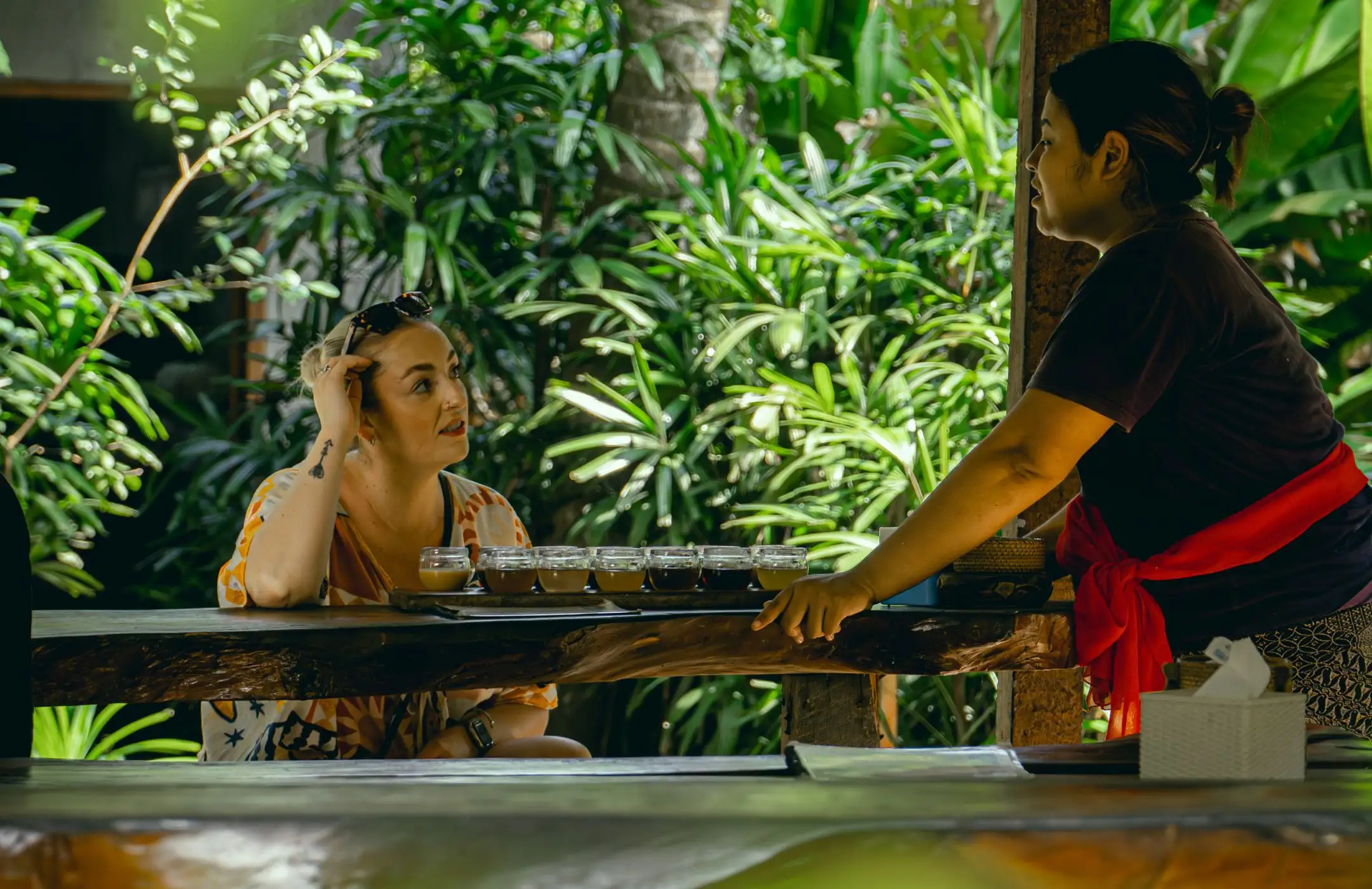
2. The Guided Tasting Makes Coffee More Interactive

The Bali coffee tasting experience at Jambe Asri is another reason coffee lovers may enjoy the visit.
After learning the preparation process, you can move into the guided tasting with more understanding.
Instead of simply trying local coffee without context, you already know part of the journey behind it.
The session can be approached in a relaxed way.
You can focus on aroma, strength, body, and overall character without needing professional tasting vocabulary.
Some selections may feel stronger or earthier.
Others may feel smoother, lighter, sweeter, or more aromatic.
The interesting part is that everyone may have a different favorite.
Couples can compare preferences.
Friends can discuss which selections stand out.
Solo travelers can focus more closely on the guidance and ask questions.
This makes the guided tasting feel interactive rather than formal.
For coffee lovers, comparing different characteristics can become one of the most enjoyable parts of the visit.
You are not expected to prove that you know everything about coffee.
You are simply exploring what you personally enjoy.
3. You Experience Coffee Inside a Natural Plantation

A coffee experience can feel very different depending on the setting.
At Jambe Asri, the coffee plantation atmosphere gives the journey a natural context.
Tropical greenery, plantation surroundings, and coffee-related details help visitors understand that the story begins long before the final tasting.
This makes the destination especially interesting for travelers who enjoy both coffee and nature.
Instead of exploring coffee inside a regular commercial setting, you experience it within a tropical environment connected to Bali agrotourism.
The plantation also creates a slower pace.
A Bali holiday can easily become full of temples, waterfalls, beaches, markets, and long drives between destinations.
Jambe Asri gives travelers a chance to include a calmer stop without making the day feel empty.
You can learn, explore, take photos, join the tasting, and continue through the destination at a comfortable pace.
For coffee lovers, that natural setting adds another layer to the experience.
Coffee becomes connected to place.
4. You Can Explore More Than One Part of the Coffee Journey

Jambe Asri is designed as a complete visitor journey rather than one isolated activity.
After learning the process, visitors can meet the luwak directly connected to the coffee story.
The encounter helps make the earlier explanation easier to understand.
The luwak is not treated as an unrelated attraction.
It is part of the destination’s central coffee experience.
Visitors should approach the encounter respectfully and follow the guidance available at the location.
Jambe Asri also has an owl encounter as a supporting activity.
The owl adds another memorable moment for families, couples, groups, and travelers creating holiday content, while the luwak coffee story remains the main focus.
The experience can then continue toward the tasting, plantation moments, and other supporting activities such as the Bali swing.
This variety makes the destination fun for mixed travel groups.
One person may be most interested in the coffee process.
Another may enjoy the tasting.
Someone else may focus on the natural setting or photography.
All of these interests can fit into one visit without losing the main coffee story.
5. You Can Explore Local Products Before Leaving

For coffee lovers, finding something to bring home is often part of the experience.
The local shop at Jambe Asri gives visitors an opportunity to explore products connected to the journey.
The available selection may include local coffee, herbal tea, spices, aromatherapy, Bali souvenirs, and other local products.
The timing makes the shop more useful.
You are not browsing without context.
You have already learned about the coffee process.
You have explored local flavors through the guided tasting.
You may already know which coffee or other products interest you.
That makes the final stage feel more personal.
Coffee lovers can focus on local coffee.
Travelers looking for gifts may explore herbal tea or spices.
Others may prefer aromatherapy or a souvenir connected to the plantation experience.
The shop completes the visitor journey naturally.
You arrive curious.
You learn.
You taste.
You explore.
Then you can bring part of the experience home.
Why the Complete Journey Feels More Fun
The strongest part of Jambe Asri is not one single attraction.
It is the way the different moments connect.
The plantation gives the experience a natural setting.
The process introduces the story.
The luwak gives the story direct context.
The guided tasting turns learning into something personal.
The local shop gives the journey a clear ending.
Supporting experiences such as the owl encounter and Bali swing add variety along the way.
For travelers looking for a fun local experience, this structure makes the visit easy to enjoy.
There is something to learn, something to taste, something to explore, and something to remember.
Easy to Add to a Bali Itinerary
Another practical advantage is that several connected activities are available in one destination.
You do not need to arrange separate stops for coffee education, tasting, a plantation setting, animal encounters, photography, and local products.
That can make Jambe Asri easy to include in a wider Bali itinerary.
It can work as a relaxed stop between major attractions.
It can also become part of a day focused on nature, local culture, or food and coffee experiences.
The destination suits:
- Coffee enthusiasts
- Couples
- Families
- Solo travelers
- Small groups
- First-time Bali visitors
- Travelers looking for local products
- Visitors who prefer light and educational activities
The experience does not require advanced knowledge or a complicated plan.
Curiosity is enough.
About Jambe Asri Agrotourism
Jambe Asri Agrotourism is a Bali agrotourism destination focused on creating a complete luwak coffee experience for travelers who want more than a quick tasting stop.
The destination is built around one clear core: helping visitors understand and experience luwak coffee through process, guided tasting, the luwak encounter, plantation atmosphere, and local products.
A visit can begin inside the tropical plantation setting.
This natural environment introduces the place behind the experience and creates a relaxed starting point before guests move into the educational part.
Visitors can then learn about the coffee-making process.
The journey introduces coffee cherries, explains the role of the luwak, and continues through the main stages leading toward the guided tasting session.
The educational approach is designed to remain clear and tourism-friendly.
First-time visitors do not need specialist coffee knowledge.
Coffee lovers can focus more closely on the preparation details, while casual travelers can still understand the core story without feeling overwhelmed.
The luwak encounter becomes another important stage.
Because visitors have already learned how the animal connects to the coffee process, meeting the luwak adds direct context to the experience.
The guided tasting then brings learning and personal preference together.
Guests can explore local coffee characteristics with a clearer understanding of what happens before the tasting stage.
This makes the experience more complete than a simple coffee stop.
Jambe Asri also includes supporting visitor activities.
An owl encounter adds another animal moment.
A Bali swing creates a playful plantation photo opportunity.
These experiences add variety for couples, families, small groups, and content creators, but they remain secondary to the central luwak coffee journey.
The natural plantation atmosphere also continues to play an important role throughout the visit.
It connects the experience with Bali agrotourism and gives travelers a calmer setting compared with many busy tourist attractions.
The local shop completes the customer journey.
Visitors can explore local coffee, herbal tea, spices, aromatherapy, Bali souvenirs, and other local products after learning and tasting.
Because the shop comes at the end of the experience, travelers already have more context when browsing the available selections.
The overall journey can be understood simply as:
Plantation Atmosphere → Coffee Process → Meet the Luwak → Guided Tasting → Supporting Experiences → Local Shop
This structure makes Jambe Asri suitable for international and domestic travelers, coffee enthusiasts, couples, families, solo travelers, and small groups searching for a local Bali experience that is easy to include in a wider travel plan.
Its strongest value lies in how every part of the destination supports one clear identity.
The plantation creates the setting.
The process creates understanding.
The luwak gives the story context.
The tasting makes the experience personal.
The owl and swing add extra moments.
The shop gives visitors something connected to the destination to explore before leaving.
Together, these elements make Jambe Asri a complete and enjoyable stop for coffee lovers without allowing the supporting attractions to take attention away from the core luwak coffee experience.
Add Jambe Asri to Your Coffee List in Bali
For coffee lovers, the best travel experiences often combine flavor with story.
At Jambe Asri Agrotourism, you can learn how luwak coffee is prepared, meet the luwak, join a guided tasting, enjoy the plantation environment, and explore local products within one connected journey.
If coffee is already part of the way you explore a destination, make Jambe Asri part of your Bali itinerary.
Start your signature luwak coffee experience at www.jambeasriagrotourism.com.


